












Since 1952
Camera House, seventy years of it.
From a Kerridge Odeon theatre foyer to a film lab on Queens Drive — the long version.

1950s – 1970s
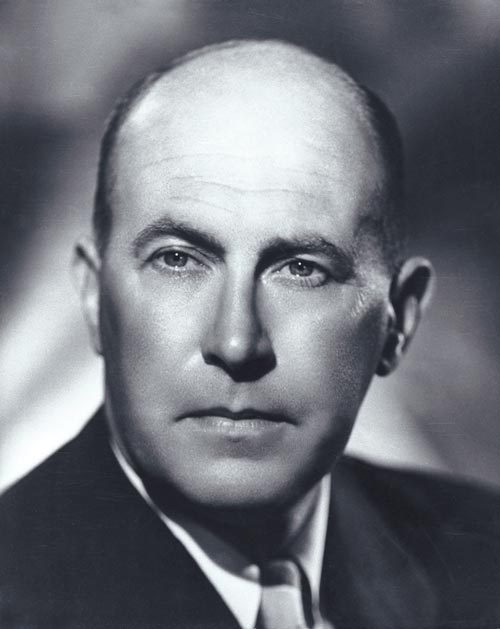
The story of Camera House begins in 1952 with Sir Robert Kerridge, a self-made businessman whose Kerridge Odeon circuit grew to 133 theatres — at its peak the largest cinema chain in New Zealand.
As cinema boomed, so did the appetite for cinema at home. Kerridge saw the opening and began importing film and film equipment through his division, Photographic Wholesalers NZ Ltd. Soon after, he opened the first Camera House, front and centre of his cinema complex on Willis Street, Wellington, selling 16mm cine film and equipment — and renting both out for home use.
Auckland City Libraries — Tāmaki Pātaka Kōrero, reference 34-249. Photograph by Clifton Firth — Robert James Kerridge, 1957

King George theatre, High Street
Lower Hutt
In 1958, after several years working for Camera House, a young photographer by the name of Maxwell Bruce opened Lower Hutt’s first Camera House — and designed the layout himself. It sat inside the King George theatre on High Street.

Sixties & Seventies
From the early 60s to the late 70s Camera House grew quickly, in stores and in popularity. The end of the 70s brought the end of an era for Kerridge Odeon. Knighted in 1962, and after many successful years in business, Sir Robert retired in 1976 and passed away at his home on 26 April 1979.

Kerridge Odeon carried on
Eighties
The business carried on through the 80s under the Kerridge and Williams families. In 1987 — the same year the stock market crashed — it was acquired by Pacer Kerridge Corporation, and in 1988 it downsized sharply as New Zealand fell into recession.

“Camera House survived”
Nineties
The 80s and 90s brought a wave of hobbyist photographers. Camera House was given a much-needed rebrand and a new slogan: “Smile, you’re at Camera House”.
In 1992 the Kerridge Corporation went into receivership and began selling off its assets. Camera House Ltd. found itself in the hands of the Japanese company Fujifilm.

Fujifilm acquired the Hanimex Group
2004
In the early 2000s, Fujifilm Japan saw the switch to digital photography coming. In 2004 Fujifilm acquired the Hanimex Group, at the time the largest distributor of its products, further securing Fujifilm’s place in the market. With Hanimex at the wheel, Camera House was rebranded once again to match the new digital age.

Twenty-two
2006
All twenty-two stores in 2006:
Whangārei, Takapuna, Glenfield, Downtown, Newmarket, Henderson, St Lukes, Pakuranga, Manukau, Chartwell, Taupō, Napier, Hastings, Palmerston North, Johnsonville, Lambton Quay, Wellington, Porirua, Lower Hutt, Christchurch, Christchurch (Northlands) and Riccarton.

The rebrand from AU
2007
In 2007 Fujifilm handed management to the Australian company The Eastmon Group, which rebranded Camera House yet again — this time to match the branding and colour scheme of its Australian stores, Eastmon Digital and Rabbit Photo.

One door closes, another opens
2008
In 2008 Fujifilm NZ began closing its low-performing stores, and by the end of the year it had announced the closure or sale of all the rest.
Of the twenty-two, three were bought: Camera House Queensgate in Lower Hutt (that’s us), Camera House Glenfield, and Camera House Henderson, which changed its name to Camera Corner. Sadly the other two closed later on, after a good run.

A new hope
2009
With the pressure of Dick Smith and other big chains, now backed by Fujifilm, the new Camera House Lower Hutt team were determined to keep the local store open and thriving.
With a passion for photography and a background in film, we kept the processor running and kept developing film — at a time when labs everywhere were switching theirs off.

The big shake-up
2016
Queensgate Mall was shaken by the 2016 Kaikōura earthquake and closed as unsafe. With only a few hours to move the entire store out, Camera House found a home a few shops down from the mall, in the hope of moving back in.
It was a tight squeeze, and it kept the staff motivated to push forward. We took the opportunity to ditch the pink and green clown vomit and go back to the classic 90s branding. It was also the year the film processor saw more film through it than in the previous five. Film was back. All those years of maintaining the processor were paying off, and demand for film cameras climbed right along with it.

Temporary, not temporary
2021
Our not-so-temporary location lasted five years. With the lease almost up — and Covid almost over — a spot across the road came calling, last occupied many years before by EB Games. All the extra space has let us expand massively: into custom framing, and into more processors, so we can keep developing film fast at the same great quality we always have.