
Camera House · Lower Hutt
Your film, developed in our own lab.
Colour, black and white, slide, cross processed and cine film, developed and scanned here in Lower Hutt — not couriered off to someone else's lab in another city.

Book your film in
Your total stays on screen as you goAnswer the questions and we'll put the right thing in your cart. Several rolls the same? Set how many at the end. Different options for each? Run through it again — everything lands in the same cart.
By post
Sending film to us
You don't have to be in Wellington. People post us film from all over the country — here's how to do it so nothing goes missing.
Order it first
Answer the questions above and pay. Your order number comes by email.

Add a note
Put your order number, name, phone and email inside the parcel.

Pack and post it
Use a padded bag or small box, and send it tracked. Undeveloped film is fine in the post.
We email your scans
Your download link arrives by email once your film is scanned.

What it costs
The order form works this out for you, but here it is laid out if you would rather just look.
Developing prices, per roll
| Film | Process | Standard scan | High-res JPG | TIFF | Develop only |
|---|---|---|---|---|---|
| 35mm | C-41 colour | $22 | $28 | $30 | $12 |
| 35mm | Black & white | $23 | $31 | $33 | $13 |
| 35mm | E-6 slide | $44 | $52 | $54 | $34 |
| 35mm | Cross process | $23 | $31 | $33 | $13 |
| 35mm | ECN-2 (cine) | $25 | $33 | $35 | $15 |
| 120 | C-41 colour | — | $24 | $34 | $14 |
| 120 | Black & white | — | $27 | $37 | $17 |
| 120 | Cross process | — | $27 | $37 | $17 |
| 110 | C-41 colour | $24 | — | — | $14 |
| 110 | Black & white | $27 | — | — | $17 |
| APS | C-41 colour | $24 | — | — | — |
| APS | Black & white | $27 | — | — | — |
- Prints: +$10 a roll for one set, +$20 for two. Gloss or matt.
- Negatives, online orders: $1.50 to keep them at the counter for you to collect, $6.50 to post back (once per order), or free packed in with the rest of your order.
Every price includes developing. 110 and APS are scanned at standard resolution; 120 is always high-res.
In the lab
The machines your film goes through
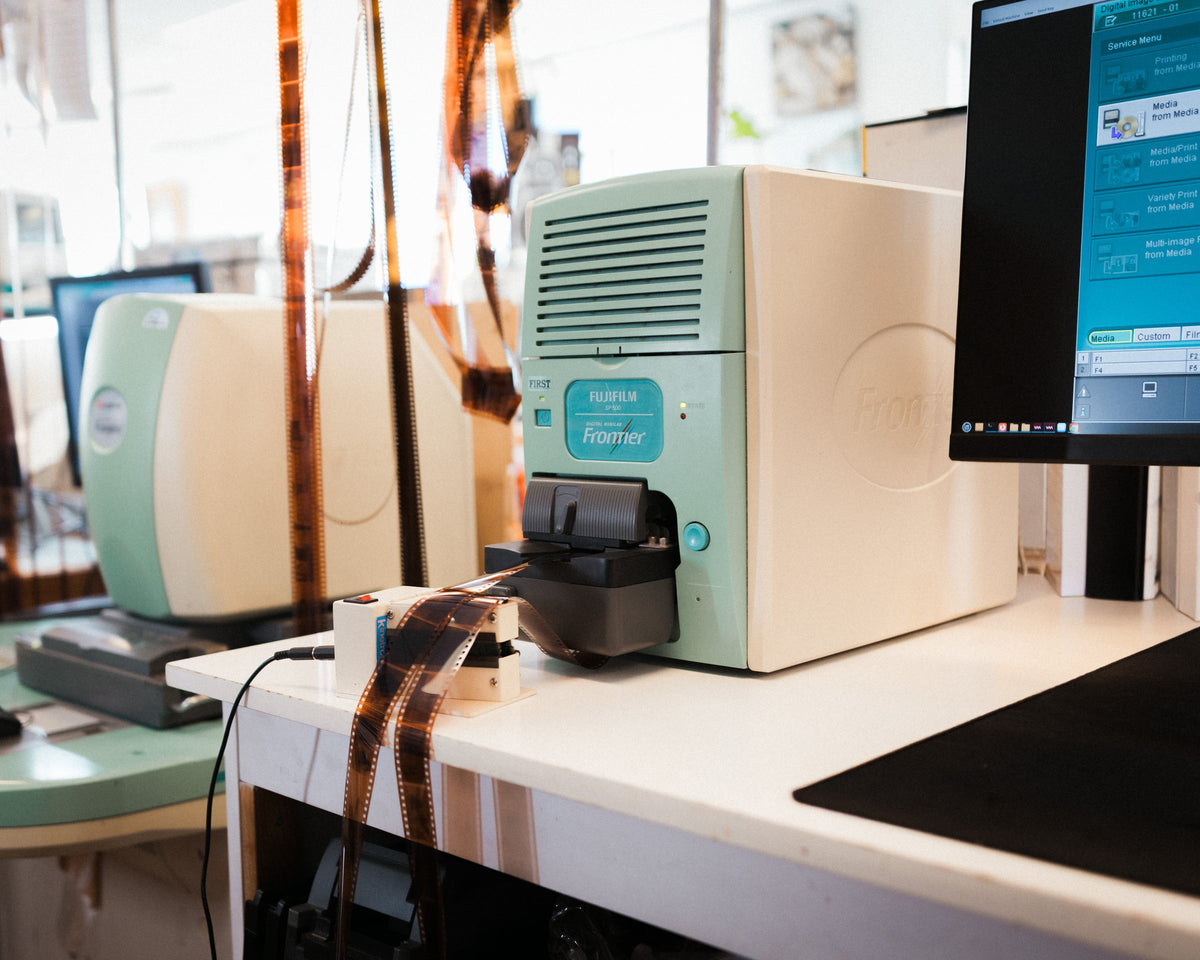
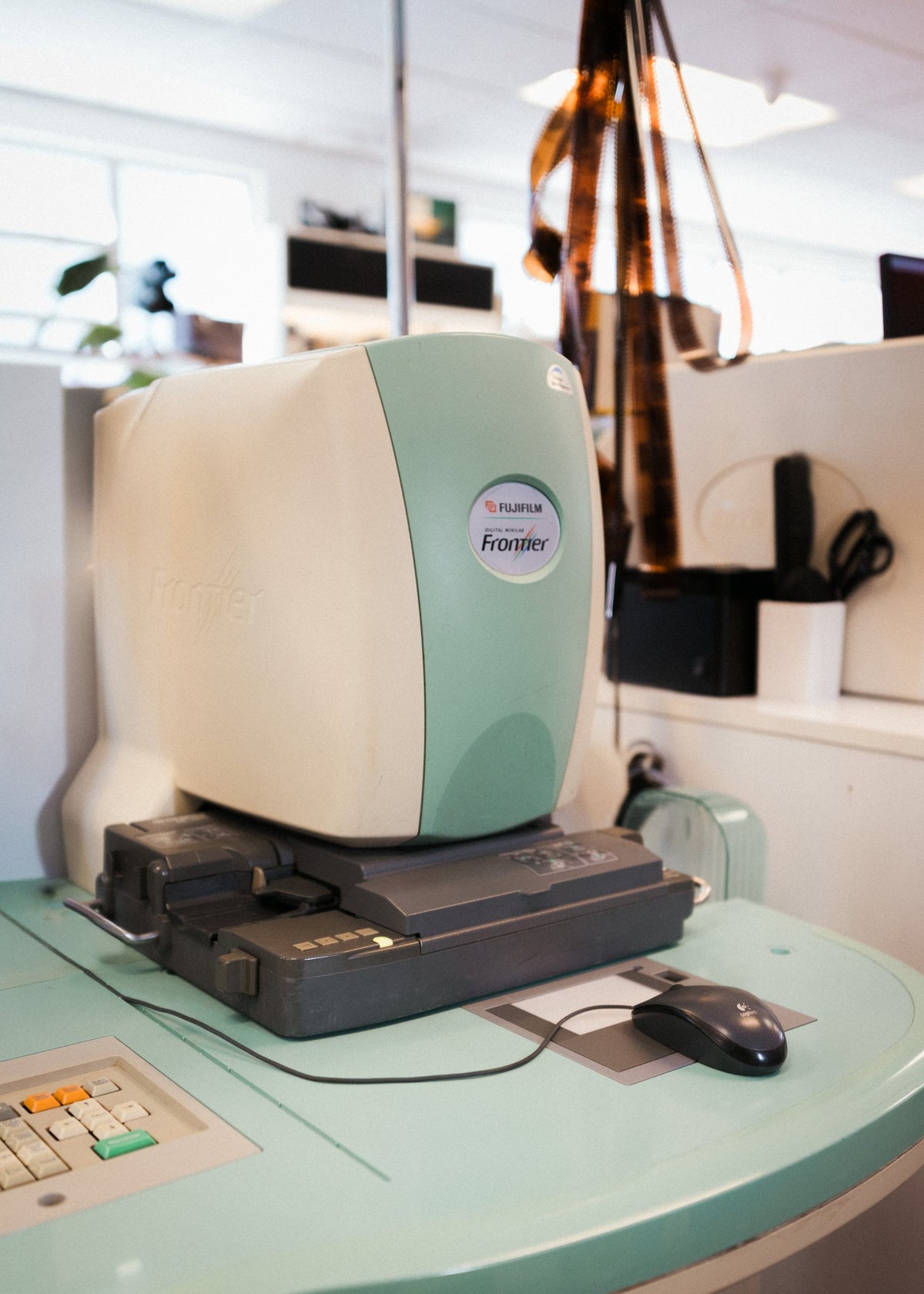
Developed and scanned here in Lower Hutt, on Fujifilm lab machines.
-
Colour developing
Fujifilm FP230BRunning Fujifilm chemistry
A Fujifilm film processor from the minilab era. Film goes in one end and comes out developed and dried, ready to scan.
-
Black & white developing
Fujifilm FP230B, convertedRunning Ilford Ilfotec RT Rapid, for fast black and white
The same processor, which we converted to run Ilford Ilfotec RT Rapid, so black and white comes through about as quickly as colour.
-
Scanner
Fujifilm Frontier SP-300035mm, 120, 110, APS and disposables. Standard and high-res scans.
The top scanner of the Frontier minilab era, and the one that replaced the SP-2000. It moves its sensor in tiny steps to build up resolution, and has built-in dust and scratch removal. It’s the scanner most people mean when they talk about “the Frontier look”: natural skin tones and colour that looks like a print on Fuji paper. Ours was made in 2006.
-
Scanner
Fujifilm Frontier SP-50035mm and disposables. Standard and high-res scans.
The scanner from the Frontier 500, Fujifilm’s smaller, more affordable minilab from the mid-2000s. It was built only for 35mm and uses the same moving-sensor idea as the SP-3000, with an LED light source. For 35mm it’s much quicker than the SP-3000. Ours is from 2009.
Before you order
Common questions
How long will it take?
The number at the top of this page is live — it's the average time a roll has actually taken in our lab today, and over the last seven days. Colour 35mm is usually the quickest. Black & white takes a few days — it runs in its own chemistry in smaller batches. Slide, cross processing and cine film take longer too, because they run less often.
What do the scans actually look like?
Standard is 3360 × 2240 px — good for prints up to A4 and anything on a screen. High resolution is 5400 × 3600 px on 35mm, which gives you room to crop and is good for prints up to A3 or larger. On 120 it depends on the frame: 6×6 is 3600 × 3600 px and 6×9 is 3600 × 5600 px. TIFF is uncompressed if you want to edit properly; JPG is fine for everything else.
See real scans in our test gallery.
What happens to my negatives?
Negatives are the developed strips of film your photos came from. What happens to them is your call, and you choose once for the whole order. We can hold them here and file them under your name, post them back to you, or bin them. Holding is the default for most people — we store them for at least 6 months. You can ask us to post them back at any time for $6.50, or we can send them free with a future order that has paid shipping. If you add prints, your negatives come back with them. After 6 months they may be destroyed, but get in touch and we'll check if we still have them.
Can I just hand in or post a disposable camera?
Yes — bring it in or post it to us, whole. We open it in the darkroom and process the film inside. It's 35mm film, so it's priced the same as a 35mm roll.
My film is ancient / I don't know what's on it.
Bring it anyway. Old film usually still holds an image, though colour shifts and contrast go strange with age — that's part of the fun. If a roll comes out blank we'll tell you what we saw on it rather than just handing back nothing.
Can I get prints as well as scans?
Yes, add them in the order above — one set or two, gloss or matt. They're posted back with your negatives. If you'd rather choose sizes and papers properly, order the scans now and take the files to our printing counter afterwards.
Can each roll have different options?
Yes. Run through the order again for each roll and they all land in the same cart. Or order them together, put a note with the order saying what you want for each roll, and clearly label the rolls so we can match them up.