


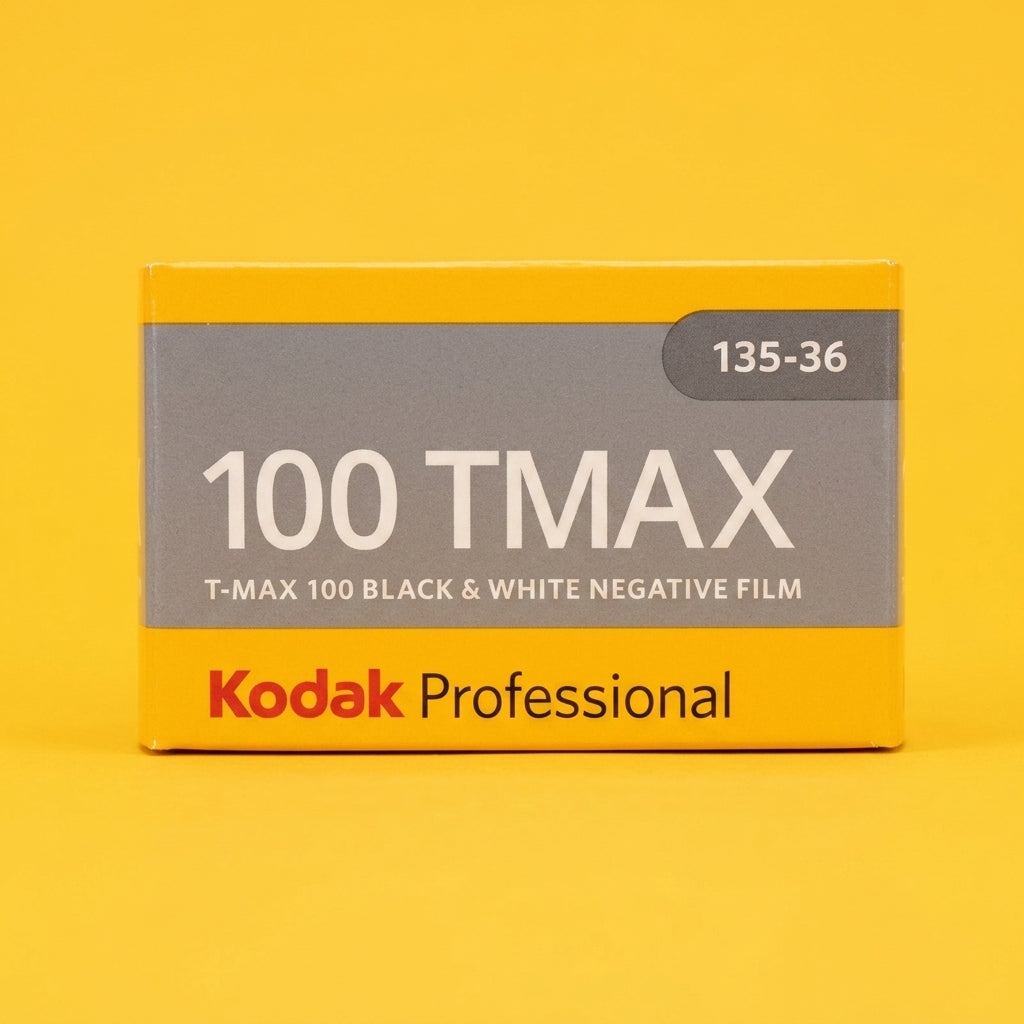
Kodak 100 TMAX - 36exp
Kodak 100 TMAX - 36exp
Kodak T-MAX 100 – One Roll of Clean, Classic Monochrome
Kodak T-MAX 100 is a fine-grain black-and-white film known for its incredible sharpness and smooth tonal range. With a low ISO of 100, it thrives in bright light and controlled conditions, making it perfect for landscapes, studio work, or anything that demands crisp detail and clean contrast. It’s a modern classic for anyone chasing that timeless black-and-white look with a refined edge.
Format: 35mm
Format: 35mm
The most common film size for still photography. Used in standard film cameras—anything from point-and-shoots to SLRs. If your camera takes “normal film,” this is it.
Exposures: 36exp
Exposures: 36exp
36exp means the roll can take up to 36 photos on a standard 35mm camera. An exposure is simply one photo — every time you press the shutter, you use one.
Keep in mind: cameras like half-frame take half-size photos, so you’ll get double the number, while panoramic cameras use more film per shot, giving you fewer than 36.
Film Speed: 100iso
Film Speed: 100iso
Your sunshine specialist. 100 ISO delivers ultra-fine grain and crisp detail when the light is bright. It’s the go-slow-and-savour-it speed—ideal for summer days, beach scenes, and anything bathed in high noon brilliance.
Color Balance: Greyscale
Color Balance: Greyscale
Film that only captures shades of grey. No colour information—classic, timeless look.
Grain: Fine
Grain: Fine
Smooth-looking images with high detail. Great for portraits or landscapes.

Colour: Black & White
Colour: Black & White
Contrast / latitude: High and Normal
Contrast / latitude: High and Normal
Processing: Black and White
Processing: Black and White
Traditional B&W processing for monochrome film. Results depend on film type and developer.
Couldn't load pickup availability
🚚 Shipped via CourierPost 1-2 working days shipping*
Since 1888, Kodak has been the most iconic name in photography. For over 135 years, they've defined what film photography means, making it accessible to everyone with their revolutionary "You press the button, we do the rest" approach. Despite navigating the digital age, Kodak remains committed to producing the legendary film stocks that generations of photographers have trusted. When you choose Kodak, you're choosing a brand with unmatched heritage and proven quality – the same film that's captured countless precious memories and Hollywood classics for over a century.
Load in Subdued Light
Always load and unload film in shade or indoors - never in direct sunlight. Even a few seconds of bright light can fog the edges of your film. If outdoors, use your body to create shade over the camera while loading.
Avoid Temperature Extremes
Don't shoot film immediately after it's been very cold or very hot. Let it stabilize to ambient temperature first, or you may experience:
- Brittle film that tears or jams
- Inconsistent development
- Base fog or colour shifts
Never Leave Film in Hot Cars
Heat is film's worst enemy. A car interior can reach 50-70°C in summer, which:
- Accelerates aging dramatically
- Causes colour shifts and fogging
- Can make film unusable in just a few hours
- Effects worsen with each exposure to heat
Even "fresh" film left in a hot car for an afternoon can look expired.
Cool & Dry is Key
Store your film in a cool, dry place away from direct sunlight. A cupboard or drawer works fine for film you'll use within 6 months. Ideal storage temperature is below 21°C with low humidity.
Long-Term Cold Storage
For extended storage (6+ months), keep film in your fridge (4-7°C) or freezer (-18°C). Store film in sealed plastic bags or containers to prevent moisture damage. Film can last years beyond its expiry date when frozen properly.
Defrosting is Essential
Before use, film MUST be brought to room temperature while still sealed. This prevents condensation forming on the film emulsion. Allow:
- Fridge-stored film: 1-2 hours to warm up
- Frozen film: 3-4 hours minimum (overnight is safest)
Hand Inspection is Best
X-ray scanners can fog film, especially:
- ISO 800 and above (most vulnerable)
- Film that passes through multiple scanners
- CT scanners (now common at many airports) - these are particularly damaging
What to Do:
- Request hand inspection at security (arrive early)
- Keep film in clear bags for easy inspection
- Remove film from boxes/canisters if requested
- Never pack film in checked luggage (those scanners are much stronger)
ISO 400 and below can usually handle 1-2 scans from older X-ray machines, but CT scanners can damage any film speed. Kodak and other manufacturers recommend hand checks for all film through CT scanners.
Already Exposed Film
Exposed film is even more vulnerable - get it processed ASAP and avoid additional scanner passes if possible.
No Returns on Film
Due to the nature of film as a consumable product, we cannot accept returns or exchanges on 35mm, 110, 120, or any other film formats once sold.
Why?
We can't verify how film has been stored or handled after it leaves our shop. Film is sensitive to heat, humidity, light, and X-rays - factors outside our control once you've purchased it. Even brief exposure to a hot car or improper storage can affect results, and we have no way to determine whether issues are due to the film itself or post-purchase conditions.
Defective or Damaged Product
If your film arrives damaged (crushed canister, torn packaging, etc.) or is clearly defective straight out of the box, let us know immediately. We'll work with you to sort it out - but we'll need to assess it before it's been loaded or exposed.